Villages located close to forests often live in harmony with nature, but they also face the increasing challenge of unexpected encounters with wild animals. As human settlements expand and natural habitats shrink, wildlife frequently moves closer to agricultural lands and residential areas in search of food and water.
These encounters can lead to serious risks such as crop damage, livestock loss, injuries, and sometimes loss of human or animal life. To reduce these risks, modern technology like AI-powered early warning systems is helping communities stay informed, prepared, and safe.
Understanding the Challenge
Human–wildlife conflict usually happens when animals cross village boundaries, farmland, roads, or railway tracks that pass through forest regions. Many of these incidents occur because wildlife migration routes overlap with human activities.
Common situations where villages face wildlife movement include:
- Farms located near forest edges
- Villages built along traditional wildlife corridors
- Areas near water bodies and crop fields
- Regions close to highways and railway lines
Without a proper monitoring system, people may not realize the presence of animals until it is too late.
What Is an AI Early Warning System?
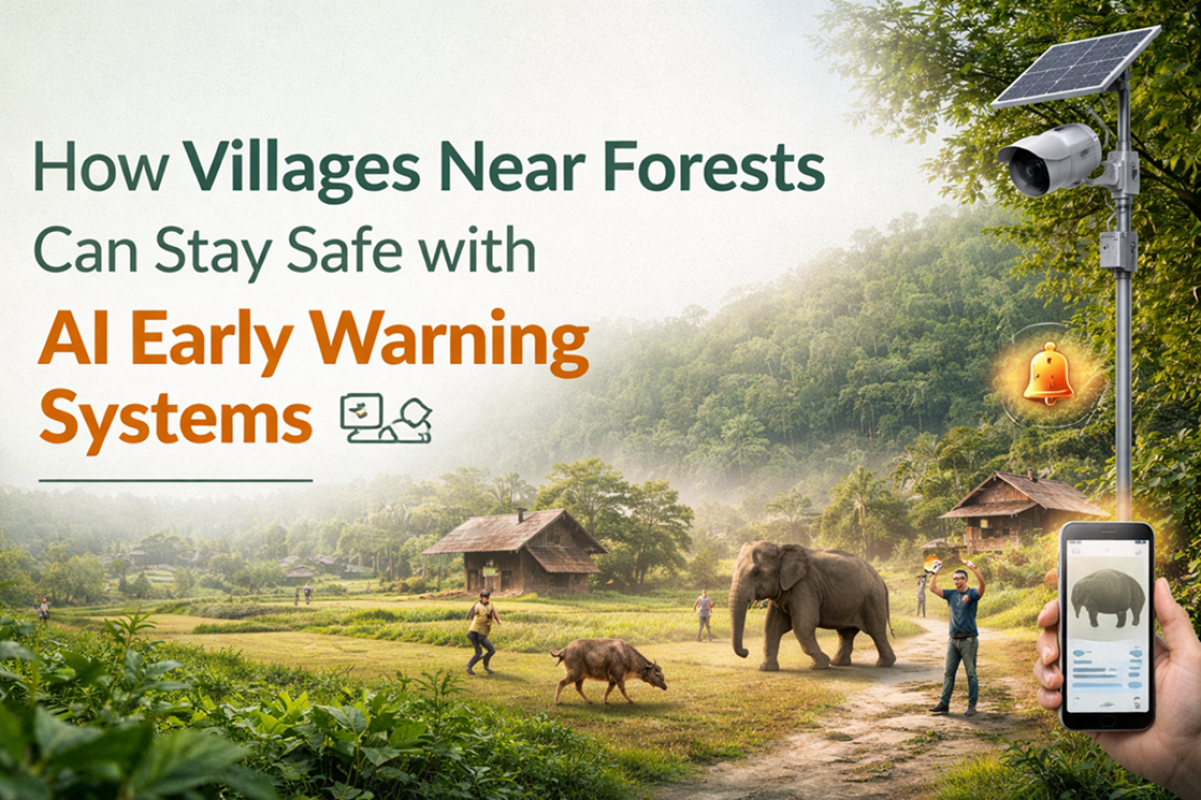
An AI early warning system is a smart monitoring solution that detects wild animals in real time and immediately sends alerts to nearby communities or authorities. The system uses advanced technology to identify animal movement before it reaches populated areas.
These systems usually include:
- AI-powered wildlife detection cameras
- Edge AI processing for faster detection
- Solar-powered units for remote locations
- Automated alert systems such as sirens, lights, or mobile notifications
Because these systems work 24/7, they provide constant monitoring even in remote areas where traditional monitoring is difficult.
How AI Early Warning Systems Help Villages Stay Safe
Early Detection Near Forest Boundaries
AI cameras can detect animals approaching village boundaries or farmland. This early identification allows communities to take precautionary steps before animals enter populated areas.
Instant Alerts for Quick Action
When wildlife is detected, alerts can be triggered immediately through:
- Local alarm systems
- Control room notifications
- Mobile alerts to forest officials or village leaders
This helps prevent sudden encounters between people and animals.
Improving Community Awareness
When villagers are informed about wildlife movement in advance, they can avoid risky areas and ensure children and livestock stay safe.
Protecting Crops and Agricultural Land
Farmers often suffer losses when animals enter fields. With early alerts, farmers can protect crops and reduce damage.
Supporting Wildlife Movement Safely
Instead of chasing animals away or causing harm, early warning systems help ensure animals pass through safely without entering villages.
Benefits for Rural and Remote Areas
AI early warning systems are especially useful in rural and forest-border regions because they are designed to operate in challenging environments.
Key advantages include:
- Works in areas with limited internet connectivity
- Solar-powered operation
- Continuous monitoring day and night
- Reduced dependency on manual surveillance
- Scalable deployment across multiple villages
This makes them a reliable solution for communities living near wildlife habitats.
The Role of Technology in Building Safer Villages
Technology is becoming an important partner in wildlife safety and rural protection. By combining artificial intelligence with real-time alerts, communities can prevent dangerous encounters rather than reacting after incidents happen.
Early warning systems not only protect people but also reduce stress on wildlife, helping maintain a balanced ecosystem.
Moving Toward Safer Human–Wildlife Coexistence
AI-powered wildlife monitoring solutions are creating a new approach to managing human–wildlife interactions. With better awareness, timely alerts, and intelligent detection, villages near forests can live more safely while respecting the natural movement of wildlife.
As more regions adopt these technologies, the future of rural safety and wildlife protection will become smarter, more proactive, and more sustainable.